
What does it mean to match replacement shingles?
Matching replacement shingles means choosing new shingles that blend as closely as possible with the existing roof in color, size, shape, surface texture, and exposure. A good match is more than finding a similar shade at a home improvement store.
Roof shingles change over time because of sunlight, weather, algae, airborne debris, and normal aging. Even shingles from the same manufacturer and color line may look different after several years on a roof. The goal is usually not to create a completely invisible repair, but to make the replacement area visually consistent and technically compatible with the rest of the roof.
For homes in Trumansburg, seasonal changes can make matching more complicated. Snow, freeze-thaw cycles, summer sun, wind, and moisture can all alter the appearance of roofing materials.
How can the existing shingle type be identified?
Start by identifying the shingle’s material and profile. Most sloped residential roofs use asphalt shingles, but asphalt products vary considerably in thickness, shape, and surface pattern.
Look at the exposed face of an intact shingle and check for:
- The number of layers or laminations
- The size and shape of the tabs or architectural sections
- The width of the exposed portion
- The pattern of colored granules
- The presence of shadow lines or dimensional features
- The type and condition of the sealant strip
Three-tab shingles have regularly spaced rectangular tabs and a flatter appearance. Architectural shingles have varied shapes, thicker profiles, and irregular shadow patterns. Mixing the two types in one visible repair will usually be noticeable and may create installation problems.
The underside of a loose shingle, a leftover bundle, or the roof’s original paperwork may reveal the manufacturer and product name. A shingle tab or wrapper stored in an attic, garage, or shed can be especially useful.
Is matching the color enough?
No. Color is only one part of the match. Two shingles can appear similar in a store but look noticeably different after installation because of differences in texture, thickness, granule distribution, and light reflection.
Compare these characteristics:
- Base color, such as gray, brown, black, or a blended combination
- Overall color variation from shingle to shingle
- Granule size and shine
- Shadow depth and dimensional relief
- Edge shape and tab spacing
- Shingle exposure, meaning how much of each course is visible
- The direction and pattern of the existing installation
A replacement shingle that is slightly different in color but identical in profile may blend better than a close color in the wrong shape. If possible, compare a sample outdoors in both sunlight and shade. Roof colors can appear warmer, cooler, lighter, or darker depending on the angle of the sun and the surrounding siding or trim.
Why do new shingles often look different from old ones?
New shingles have not experienced the same weathering as the existing roof. Ultraviolet light gradually changes the color of exposed granules, while rain and snow can wash away loose surface particles. Dirt, pollen, moss, and airborne residue can also affect the roof’s appearance.
This means a new shingle may be the correct original color but still appear brighter or more saturated than the surrounding roof. Differences can become less noticeable over time, but weathering is not uniform. A shaded roof slope may age differently from a south-facing slope, and sections near trees may collect more debris or moisture.
A sample should be compared against the roof itself rather than against a small piece viewed indoors. The most accurate comparison usually comes from placing the sample near the repair area and checking it from ground level.
How can a homeowner locate an older shingle style?
Older products may no longer be manufactured, especially if the roof is more than a decade old. Searching by color alone is rarely sufficient. Useful identifying details include:
- Manufacturer name
- Product or series name
- Approximate installation year
- Shingle dimensions
- Number of bundles used
- Architectural or three-tab design
- Any printed code or label on leftover material
Roofing records, property documents, photographs from the time of installation, and leftover bundles may provide clues. A clear close-up photograph can also help with identification, but photographs may distort color depending on lighting and camera settings.
If the original shingle is discontinued, the closest current match should be judged by profile, dimensions, color blend, and compatibility with the existing roof system. A perfect match may not be available, particularly when the roof has been exposed for many years.
Can individual shingles be replaced without disturbing nearby shingles?
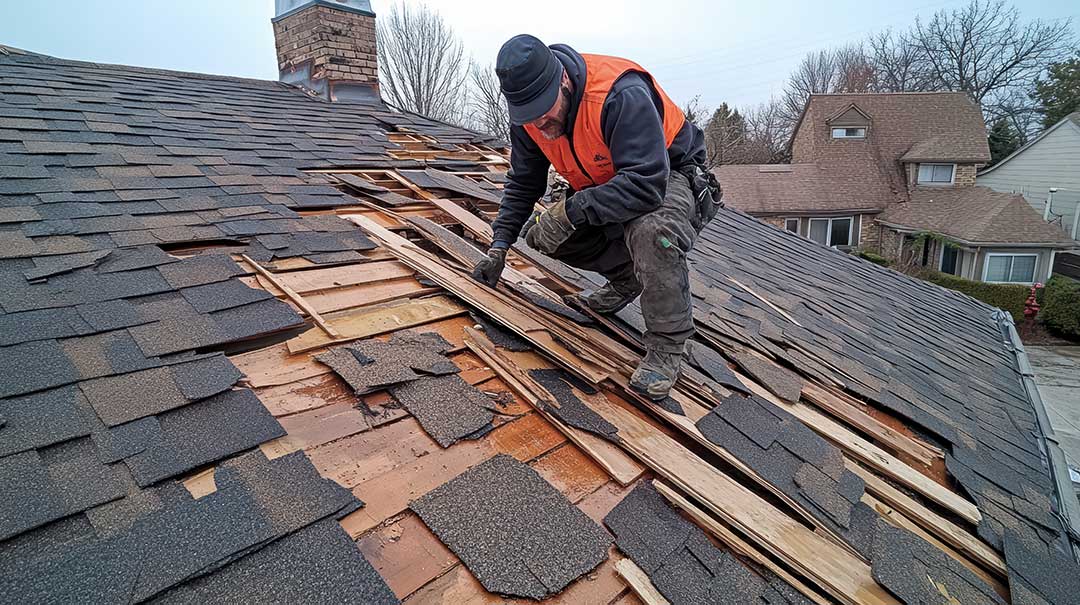
Sometimes, but the condition of the surrounding shingles matters. Asphalt shingles become less flexible as they age. Attempting to lift brittle shingles can crack them, loosen nearby sealant bonds, or damage the surrounding courses.
A repair also requires compatible roofing nails and correct placement. Nails that are too high, too low, or placed through the wrong part of the shingle can leave the repair vulnerable to wind and water intrusion. Replacement shingles must also be integrated with the existing sealant strips rather than simply laid over the damaged area.
If surrounding shingles are curled, cracked, brittle, or losing large amounts of granules, a small repair may not be durable even if the new shingle matches well. The visual match and the condition of the roof need to be considered together.
What if the exact shingle is no longer available?
There are several practical options, depending on the roof’s age and the location of the damage.
For a small repair in a visually prominent area, the closest available match can be selected based on profile and color blend. Sometimes a shingle from a less visible roof slope can be moved to the repair area, with the less visible section receiving the newer replacement. This approach may improve appearance but still requires care because older shingles can be fragile.
For extensive damage or widespread aging, replacing a larger roof section may produce a more consistent result than scattering unmatched shingles across the roof. A full replacement is not automatically necessary, but the repair should be evaluated in relation to the roof’s remaining service life.
A color mismatch is generally cosmetic. A mismatch in shingle dimensions, profile, fastening requirements, or compatibility can create a functional problem.
Should shingles from different manufacturers be mixed?
Mixing products is not automatically unsafe, but it is rarely ideal. Manufacturers may use different dimensions, sealant locations, installation instructions, and material thicknesses. Even products with similar names can have different requirements.
The most reliable match comes from the same manufacturer and product line. If that cannot be found, the replacement should have compatible dimensions, exposure, profile, and installation requirements. Mixing unrelated products simply because their colors look similar can result in uneven courses, poor alignment, or inadequate sealing.
Building codes and manufacturer instructions may also affect how repairs are completed. Roof penetrations, flashing, underlayment, ventilation, and ice-dam protection should not be overlooked while focusing only on the visible shingle.
When is a mismatch more than a cosmetic concern?
A mismatch deserves closer attention when it affects the way water drains or the way shingles resist wind. Warning signs include:
- Different shingle dimensions that interrupt course alignment
- Raised or uneven edges
- Exposed nail heads
- Gaps between shingles
- Loose or missing sealant bonds
- Shingles that do not lie flat
- Buckling, curling, or cracked surrounding material
- Water staining in the attic or upper interior walls
Snow and ice conditions can expose weaknesses that are not obvious during dry weather. In the local climate, freeze-thaw movement and wind-driven precipitation can make small installation defects more consequential.
When shingles are too brittle to lift safely, the roof is steep or difficult to access, or damage is near an edge, valley, chimney, skylight, or other roof penetration, professional assessment is justified because fall hazards and concealed water damage may be present.
How should the repair area be checked after replacement?
A completed repair should be inspected from several angles and under different lighting conditions. From the ground, look for differences in height, alignment, color, and shadow pattern. From the attic, check for daylight, damp sheathing, stained insulation, or signs of water entry after wet weather.
The repair should also be observed through at least one period of wind and precipitation. A shingle that appears acceptable at installation may later lift if the sealant strip does not bond or if fastening was incomplete.
Matching replacement shingles is a combination of identification, visual comparison, material compatibility, and careful installation. The closer the existing product can be identified before purchasing replacement material, the better the chance of achieving a repair that blends with the roof and performs properly.
